Water Dispenser with RO
Choose Purpose


Water Dispenser with RO System: Purified Drinking Water for Every Need
A Water Dispenser with RO System is an integrated drinking-water solution that purifies water through reverse osmosis and dispenses it as hot, cold, or normal water. It combines RO-based purification with convenient dispensing, making it ideal for offices, schools, hospitals, factories, hotels, restaurants, showrooms, and residential spaces.
Instead of installing a separate RO plant and water dispenser, a Water Dispenser with RO System provides purified water directly at the point of use. It is a practical solution for locations that need safe drinking water with minimal manual handling and continuous availability.
What Is a Water Dispenser with RO?
A Water Dispenser with RO is a water-purification and dispensing unit that uses reverse-osmosis technology to reduce dissolved impurities from raw water. Depending on the model, it may also include UV sterilization, UF filtration, TDS control, mineral dosing, and hot-and-cold water dispensing.
A typical Water Dispenser with RO System includes:
- Raw-water inlet and pre-filtration
- Sediment filter
- Activated-carbon filter
- RO membrane and pressure vessel
- High-pressure booster pump
- UV sterilizer, where required
- UF filter, where required
- TDS controller or mineral cartridge
- Hot, cold, and normal water tanks
- Stainless-steel or food-grade dispensing taps
- Control panel and indicator lights
- Drip tray and drainage arrangement
The system provides purified drinking water in the required temperature—hot, cold, or ambient—directly from the dispenser.
Key Features of Water Dispenser with RO
A Water Dispenser with RO System is designed for convenient, hygienic, and continuous drinking-water access.
Important features include:
- RO purification: Reduces dissolved salts, impurities, hardness, and unwanted contaminants
- UV sterilization: Provides an additional safety barrier against microorganisms, where included
- UF filtration: Offers additional clarity and safety, where included
- Hot, cold, and normal water: Allows users to choose the required water temperature
- Multiple dispensing taps: Supports simultaneous water collection by multiple users
- Stainless-steel construction: Offers hygiene, durability, and corrosion resistance in commercial models
- Compact design: Saves space compared with separate RO plant and dispenser installations
- Automatic operation: Supports convenient, low-intervention daily use
- TDS control: Helps adjust the taste and mineral balance of purified water, where included
- Low maintenance: Requires routine filter, membrane, and system servicing
Commercial RO water dispensers are commonly available with hot, cold, and ambient water options, stainless-steel bodies, multiple taps, and RO/UV/UF purification.kent.co+3
How a Water Dispenser with RO Works
- Raw-water intake: Raw water enters the system through a connected water source.
- Pre-filtration: Sediment and carbon filters remove suspended particles, chlorine, odour, and visible impurities.
- RO purification: The RO membrane reduces dissolved salts, hardness, and other dissolved contaminants.
- UV treatment: Where included, UV sterilization targets microorganisms for additional safety.
- UF treatment: Where included, UF filtration provides an additional barrier for clarity and safety.
- Temperature control: The system heats, cools, or stores water at ambient temperature as required.
- Dispensing: Users collect hot, cold, or normal purified water through the dispenser taps.
This integrated process ensures that users receive purified water in the required temperature directly from the dispenser.
Applications of Water Dispenser with RO
A Water Dispenser with RO System is suitable for locations where people need convenient access to safe drinking water.
Common applications include:
- Offices and corporate buildings
- Schools, colleges, and universities
- Hospitals and healthcare centres
- Factories and manufacturing units
- Hotels, restaurants, and cafeterias
- Showrooms and retail stores
- Residential societies and apartments
- Government offices and public buildings
- Reception areas and waiting rooms
- Construction sites and labour colonies
For offices and institutions, a Water Dispenser with RO provides a practical hydration solution for employees, students, staff, and visitors. For factories and public spaces, it supports employee welfare and reduces dependence on packaged bottled water.
Benefits of Water Dispenser with RO
- Purified drinking water: RO purification helps reduce dissolved impurities and improve water quality.
- Hot, cold, and normal water: Users can choose the required water temperature as per their need.
- Hygienic dispensing: Controlled dispensing and stainless-steel construction support better hygiene.
- Space-saving design: Combines purification and dispensing in one integrated system.
- Lower plastic waste: Refillable bottles and glasses reduce reliance on single-use plastic bottles.
- Convenient for high footfall: Multiple taps allow several users to collect water at the same time.
- Low operational effort: Automatic operation reduces the need for constant supervision.
- Suitable for institutions: Ideal for schools, hospitals, offices, factories, hotels, and public spaces.
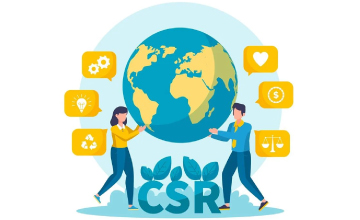
Water Dispenser with RO for CSR Activity
A Water Dispenser with RO System can be a strong CSR Activity for companies focused on safe drinking water, public health, hygiene, and community welfare. It provides a visible, long-term community asset that serves students, workers, visitors, and local residents every day.
Unlike one-time donations, a Water Dispenser with RO continues to deliver value over time. It combines purified-water access with convenient hot, cold, and normal water dispensing, making it especially suitable for schools, hospitals, public spaces, and industrial areas.
Why Companies Choose RO Water Dispenser CSR Projects
Companies choose Water Dispenser with RO projects because they address an essential community need while supporting long-term social and environmental goals.
Key benefits of Water Dispenser with RO CSR Activity include:
- Improved public health: Reliable access to purified drinking water helps reduce dependence on unsafe water sources.
- Better community welfare: The dispenser provides convenient hydration for students, workers, visitors, and local residents.
- Support for ESG goals: Water access, sanitation, plastic reduction, and community development align with sustainability priorities.
- Visible social impact: A Water Dispenser with RO is a practical public utility that community members can use daily.
- Long-term infrastructure: With proper maintenance, the system can serve a community for many years.
- Local participation: Schools, panchayats, community groups, and local operators can be involved in monitoring and upkeep.
- Positive brand reputation: Companies can demonstrate meaningful community investment through a tangible water-access project.
Ideal Locations for CSR Water Dispenser Projects
CSR-funded Water Dispensers with RO deliver the greatest impact when installed in locations with high community need and limited access to safe drinking water.
Popular CSR installation sites include:
- Government schools and colleges
- Rural villages and gram panchayats
- Public hospitals and primary health centres
- Community centres and anganwadi centres
- Industrial areas and worker colonies
- Bus stands and railway stations
- Public parks and community spaces
- Areas affected by high TDS, fluoride, arsenic, or microbial contamination
CSR Water Dispenser Project Model
A successful CSR Water Dispenser with RO project should be planned as a complete community-water solution, not only as an equipment installation.
A practical CSR project model includes:
- Need assessment: Identify the school, hospital, village, or public location with the greatest need for safe drinking water.
- Water-quality testing: Test source water for TDS, hardness, fluoride, arsenic, microbial contamination, and other relevant parameters.
- Capacity planning: Select the appropriate dispenser capacity and RO capacity based on daily footfall and peak demand.
- System configuration: Choose RO, UV, UF, stainless-steel construction, tap configuration, and temperature options as required.
- Site development: Complete civil work, plumbing, electrical connections, drainage, shelter, and safety arrangements.
- Installation and commissioning: Install, test, and commission the Water Dispenser with RO with proper water-quality verification.
- Community engagement: Educate users on safe water handling, hygienic container use, water conservation, and responsible usage.
- Operations and maintenance: Assign a local operator or service partner for cleaning, filter replacement, membrane servicing, and preventive maintenance.
- Impact reporting: Track daily water dispensing, active users, water quality, system uptime, and community feedback.
Measuring CSR Impact
A Water Dispenser with RO CSR Activity can be measured through clear, reportable indicators. This helps companies demonstrate social impact to stakeholders, CSR committees, and communities.
Important impact metrics include:
- Number of beneficiaries served
- Daily and monthly litres of purified water dispensed
- Number of students, workers, or households covered
- Reduction in dependence on unsafe water sources
- Reduction in single-use plastic bottle usage
- System uptime and service response time
- Water-quality parameters such as TDS and microbial safety
- Community satisfaction and feedback
- Improvement in hygiene awareness and safe-water practices
Features to Check Before Buying
Before selecting a Water Dispenser with RO System, evaluate the complete system rather than focusing only on the dispenser capacity.
- RO purification capacity suitable for daily demand
- UV or UF treatment where required by source water
- Hot, cold, and normal water dispensing options
- Stainless-steel or food-grade contact materials
- Adequate storage capacity for expected footfall
- Multiple dispensing taps for simultaneous use
- TDS controller or mineral cartridge, where required
- Proper drainage and drip-tray arrangement
- Automatic operation and safety controls
- Filter-change alerts and preventive-maintenance support
- Warranty, spare-parts availability, and service network
- Installation, commissioning, and operator training
How to Choose the Right Manufacturer
Do not select a Water Dispenser with RO based only on the lowest quoted price. Consider the total cost of ownership, including electricity, filters, membranes, servicing, downtime, spare parts, and long-term reliability.
| Selection Factor | Why It Matters |
|---|---|
| Industry experience | A specialist understands source-water challenges and site-specific requirements |
| Product quality | Better materials and components improve system life and hygiene |
| Certifications | Helps ensure quality, safety, and regulatory compliance |
| Customization | Dispenser capacity, RO capacity, taps, and temperature options can match the project |
| Installation support | Proper commissioning prevents early operational issues |
| After-sales service | Fast maintenance protects water availability and system performance |
| Transparent quotation | Helps compare purification, dispensing, accessories, and installation clearly |
| CSR project experience | Helps design a sustainable, community-friendly water-access programme |
Why Choose Sahara Aqua Soft?
Sahara Aqua Soft provides Water Dispenser with RO solutions for commercial, institutional, industrial, community, and CSR requirements. Our systems are designed for reliable purification, durable construction, convenient dispensing, and dependable after-sales support.
We offer:
- Water Dispenser with RO System
- Hot, cold, and normal water dispensers
- RO, UV, and UF purification options
- Stainless-steel and food-grade construction options
- Single-tap, dual-tap, and multi-tap configurations
- Customized purification capacity options
- Professional installation and commissioning
- Maintenance, spare parts, and technical support
- Solutions for schools, hospitals, offices, factories, hotels, villages, and CSR projects
Get the Right Water Dispenser with RO
The right Water Dispenser with RO System depends on your water source, daily demand, location, purification requirement, temperature needs, and installation conditions. Share your requirement—such as a Water Dispenser with RO for office, RO water dispenser for school, hot and cold RO water dispenser, or CSR Water Dispenser project—and Sahara Aqua Soft can provide a customized quotation with the most suitable configuration.
FAQs
What is a Water Dispenser with RO System?
A Water Dispenser with RO System is an integrated drinking-water unit that purifies water through reverse osmosis and dispenses it as hot, cold, or normal water.
Who should use a Water Dispenser with RO?
A Water Dispenser with RO is suitable for offices, schools, hospitals, factories, hotels, residential societies, public buildings, and other locations with regular drinking-water demand.
Does a Water Dispenser with RO provide hot and cold water?
Yes. Many Water Dispensers with RO provide hot, cold, and normal (ambient) water options, allowing users to choose the required temperature.
Can a Water Dispenser with RO be used for CSR Activity?
Yes. A Water Dispenser with RO is a strong CSR Activity because it provides long-term access to safe drinking water, improves community health, supports hygiene, and creates measurable social impact.
What maintenance does a Water Dispenser with RO need?
Regular maintenance includes replacing sediment and carbon filters, servicing the RO membrane, checking the UV system, cleaning the storage tanks, inspecting taps and drainage, and performing preventive maintenance.
Is stainless steel better for a Water Dispenser with RO?
Yes. Stainless-steel construction is generally preferred for commercial and public installations because it offers better hygiene, durability, and corrosion resistance.