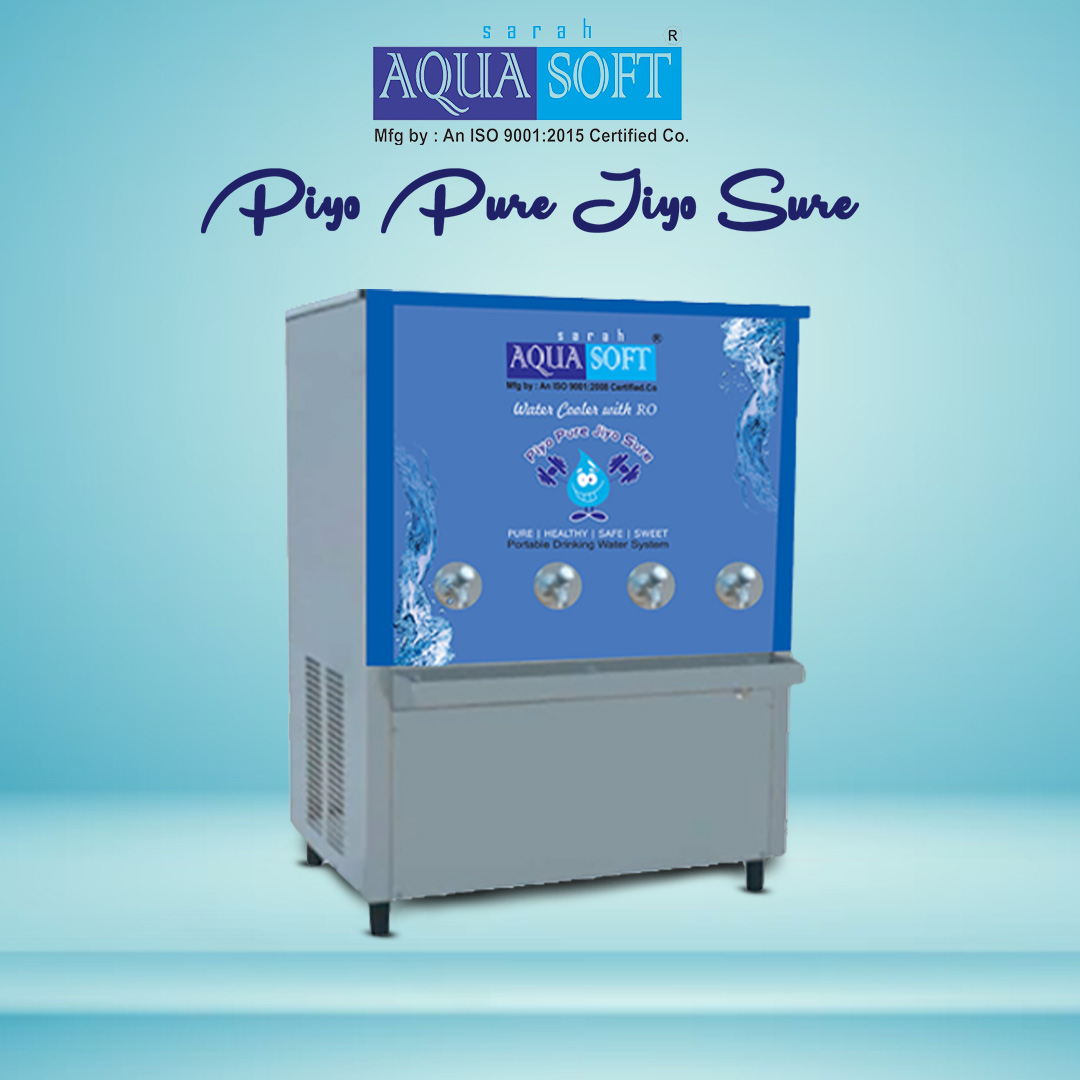
Water Cooler with RO for Offices & Commercial Spaces: Benefits, Types, Price & Buying Guide
Clean and conveniently available drinking water is an important facility for offices, schools, hospitals, factories, warehouses, and other commercial spaces. In locations where the incoming water requires treatment and users also prefer chilled water, a Water Cooler with RO can combine purification and cooling in one system.
Unlike a conventional water cooler that mainly cools water, an RO water cooler can include filtration and reverse osmosis purification before the water reaches the dispensing point. This makes it a practical option for commercial locations with regular drinking water demand.
For businesses, selecting the right system requires more than comparing the initial water cooler with RO price. Water quality, purification capacity, cooling capacity, number of users, installation requirements, maintenance, and after-sales service should also be considered.
This guide explains how a Water Cooler with RO works, its benefits, types, capacity options, price factors, maintenance requirements, and its potential as a business opportunity.
What Is a Water Cooler with RO?
A Water Cooler with RO is a drinking water system that combines reverse osmosis purification with a water cooling and dispensing unit.
The RO section helps reduce dissolved salts and other contaminants from suitable feed water, while the cooling section lowers the temperature of the treated water for convenient consumption.
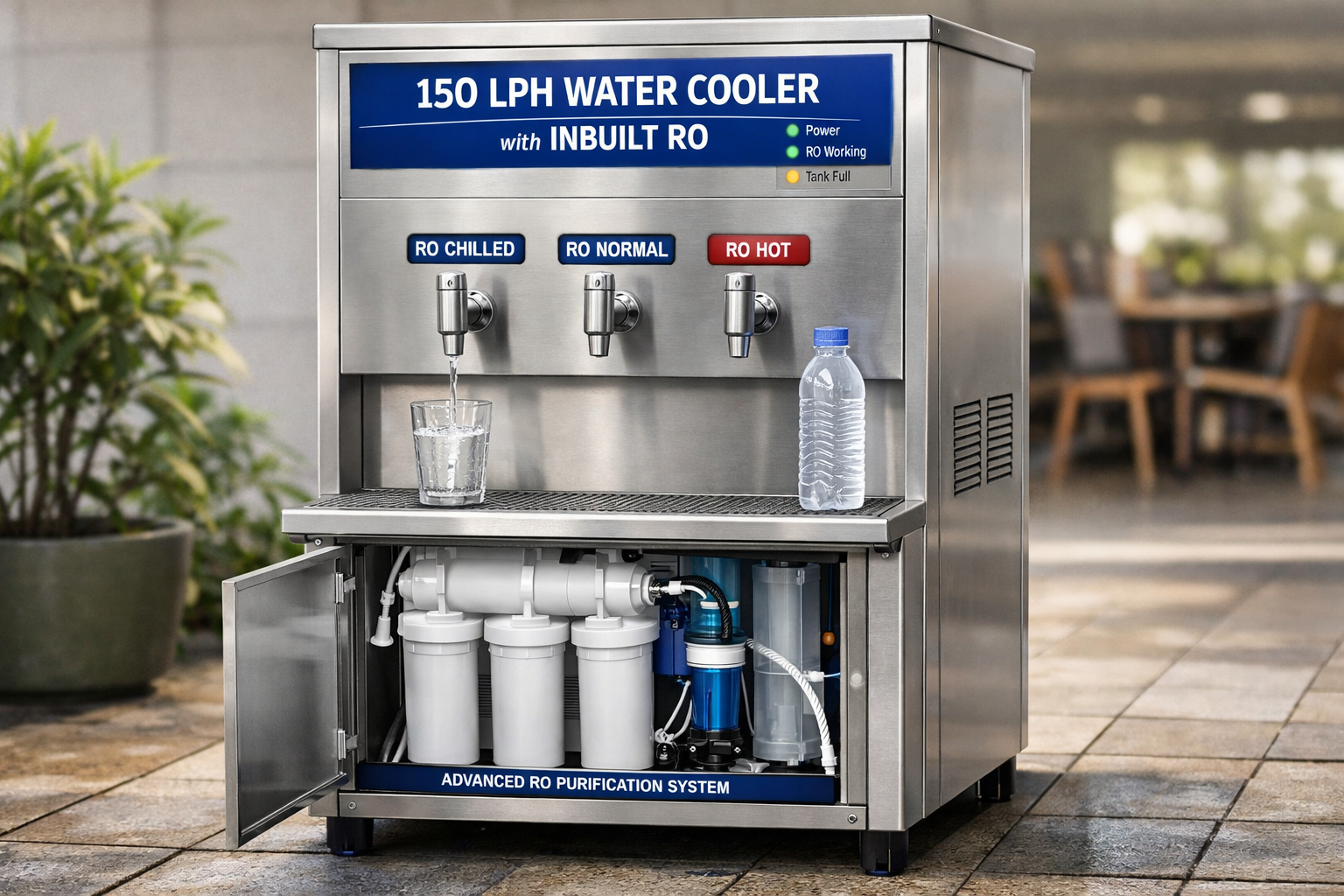
Depending on the model, a commercial RO water cooler may include:
- RO membrane
- Sediment filter
- Activated carbon filter
- High-pressure pump
- Cooling compressor
- Stainless steel storage tank
- Dispensing taps
- Electrical control system
The exact configuration varies by model and should be selected according to the water source and requirements of the installation site.
How Does a Water Cooler with RO Work?
The working process combines water purification and cooling.
Step 1: Water Inlet
Water enters the system from a suitable source, such as:
- Municipal water supply
- Borewell
- Storage tank
The source water should be assessed before selecting the appropriate treatment configuration.
Step 2: Pre-Filtration
The incoming water passes through pre-filters that can reduce suspended particles and other substances that may affect the RO system.
Common stages include sediment and activated carbon filtration.
Step 3: RO Purification
Water is pressurized and passed through an RO membrane. The membrane helps reduce dissolved salts and other contaminants from the treated water.
Step 4: Cooling
The treated water enters the cooling section. A refrigeration compressor lowers the water temperature before dispensing.
Step 5: Storage and Dispensing
Cooled water is stored in the designated tank and supplied through dispensing taps or outlets.
The exact treatment and cooling process depends on the product configuration.
Why Is Demand for Water Cooler with RO Increasing?
Businesses and institutions increasingly need drinking water systems that provide both treatment and convenient dispensing.
Several factors contribute to this demand.
Changing Water Quality
Water quality varies according to location and source. Borewell water, for example, may have elevated TDS or other characteristics that require treatment.
An appropriately designed RO system can help address certain water-quality concerns.
Convenience
A combined purification and cooling system allows users to access treated and chilled water from one installation.
Reduced Dependence on Packaged Water
Businesses that regularly purchase bottled or can water may consider an on-site purification system to reduce their dependence on packaged drinking water.
Increasing Workplace Expectations
Employees, visitors, students, patients, and customers expect convenient access to drinking water in many commercial and institutional environments.
Water Cooler vs Water Cooler with RO
A conventional water cooler primarily provides cooling. It does not necessarily purify the incoming water.
A Water Cooler with RO combines water treatment with cooling and dispensing.
| Feature | Normal Water Cooler | Water Cooler with RO |
|---|---|---|
| Water cooling | Yes | Yes |
| RO purification | Usually not included | Included |
| Filtration | Depends on model | Available |
| Hot/cold options | Available in some models | Available in some models |
| Filter maintenance | Depends on model | Required |
| Suitable for high-TDS water | Not necessarily | Can be suitable when correctly designed |
The appropriate system depends on the source-water quality, consumption, and requirements of the location.
Water Cooler with RO vs Bottled Water
Businesses often compare the cost and convenience of an RO water cooler with regular packaged water.
Challenges of Bottled Water
- Recurring purchase expenses
- Storage requirements
- Transportation and handling
- Supply coordination
- Packaging waste
Potential Benefits of an RO Water Cooler
- On-site water purification
- Convenient chilled-water dispensing
- Reduced dependence on packaged water
- Planned filter and membrane maintenance
- Suitable for regular institutional use
The total cost should include equipment, installation, electricity, filter replacement, maintenance, and other operating expenses.
Main Components of a Water Cooler with RO
Understanding the components can help buyers compare different models.
RO Membrane
The RO membrane is responsible for reducing dissolved salts and other contaminants during the purification process.
Sediment Filter
A sediment filter helps reduce suspended particles such as dirt and sand.
Activated Carbon Filter
Carbon filtration can help reduce chlorine, odour, and certain organic compounds, depending on the filter and water quality.
High-Pressure Pump
The pump provides the pressure required for the RO process.
Cooling Compressor
The compressor powers the refrigeration system used to cool the treated water.
Storage Tank
The storage tank holds treated or cooled water before dispensing, depending on the system design.
Dispensing Taps
Taps or dispensing outlets allow users to access the treated and cooled water.
Types of Water Coolers with RO
Different locations require different configurations.
Floor-Standing Water Cooler with RO
Floor-standing models are suitable for areas with sufficient floor space and regular water demand.
They can be used in:
- Offices
- Factories
- Schools
- Warehouses
- Commercial buildings
Wall-Mounted Water Cooler with RO
Wall-mounted configurations can help save floor space and may be suitable for schools, clinics, offices, and other areas with limited space.
Industrial Water Cooler with RO
Higher-capacity systems can be considered for factories, large campuses, warehouses, and other locations with significant drinking water demand.
Hot and Cold Water Cooler with RO
Some systems combine RO purification with hot and cold dispensing options. These can be useful in offices and selected institutional applications.
Water Cooler with RO Capacity Options
Capacity is an important factor when selecting a commercial RO water cooler.
Depending on the model, commercial systems may be available in different capacities, such as:
- 20 LPH
- 40 LPH
- 80 LPH
- 150 LPH
- Higher-capacity configurations
LPH means litres per hour and indicates the approximate purification or production capacity of the system.
The required capacity depends on:
- Number of users
- Daily drinking water requirement
- Peak usage
- Operating hours
- Storage capacity
- Water source
A small office and a large factory may require completely different system capacities.
Where Is a Water Cooler with RO Used?
A commercial water cooler with RO can be considered for many applications.
Offices and Corporate Buildings
Provides convenient drinking water for employees and visitors.
Schools and Colleges
Can serve students, teachers, and staff throughout the day.
Hospitals and Clinics
Can be used for staff, patients, attendants, and visitors according to the facility's requirements.
Factories and Warehouses
Useful for workplaces where employees need regular access to drinking water.
Commercial Buildings
Suitable applications can include showrooms, malls, training centres, and other commercial facilities.
Public and Institutional Facilities
Depending on project requirements, RO water coolers may also be used in community facilities and other high-footfall locations.
Benefits of a Commercial Water Cooler with RO
1. Purification and Cooling in One System
The system combines water treatment and cooling, reducing the need for separate equipment.
2. Convenient Drinking Water Access
Users can access treated and chilled water directly from the dispensing unit.
3. Suitable for Multiple Users
Different capacities allow businesses to choose a system based on expected demand.
4. Reduced Dependence on Packaged Water
An on-site system can reduce the need for regular packaged-water purchases where site conditions are suitable.
5. Planned Maintenance
Filters, membranes, pumps, and cooling components can be inspected and serviced according to a maintenance schedule.
6. Flexible Commercial Applications
Different configurations can be used across offices, factories, schools, hospitals, and other institutional facilities.
Water Quality and Hygiene Considerations
Water quality should be considered before installing an RO water cooler.
The source water may have issues such as:
- High TDS
- Unpleasant taste
- Odour
- Suspended particles
- Hardness
- Other source-specific contaminants
A water test can help identify the appropriate treatment process.
It is important not to assume that RO is required for every water source. The purification system should be selected according to actual water quality and the intended application.
Electricity and Water Consumption
Operating costs are important when comparing commercial RO water coolers.
Electricity Consumption
Power consumption depends on factors such as:
- RO pump size
- Cooling compressor capacity
- Storage configuration
- Operating hours
- Hot and cold features
Always check the manufacturer's product specifications for actual power requirements.
RO Reject Water
RO purification produces reject water.
Depending on its quality and local conditions, this water may be suitable for certain non-potable uses, such as:
- Floor cleaning
- Toilet flushing
- Gardening
- Other suitable utility applications
Reuse should only be considered where the water quality is appropriate for the intended non-potable use.
Installation of a Water Cooler with RO
Professional installation helps ensure proper operation.
A typical installation may include:
- Site inspection
- Water source assessment
- Selection of installation location
- Water inlet connection
- Drain connection
- Electrical connection
- System testing
- User demonstration
Before installation, ensure that the site has sufficient space, water supply, drainage, and electrical infrastructure.
Maintenance Requirements
Regular maintenance helps maintain purification and cooling performance.
Common maintenance activities include:
- Sediment filter replacement
- Carbon filter replacement
- RO membrane inspection
- Storage tank cleaning
- Pump inspection
- Compressor inspection
- Cooling system servicing
- Dispensing tap inspection
Maintenance frequency depends on water quality, usage, system design, and the manufacturer's recommendations.
Common Problems with Water Cooler with RO
Low Water Flow
Possible causes: Clogged filters, membrane fouling, insufficient water pressure, or pump-related problems.
Solution: Inspect the filters, membrane, pump, and inlet pressure and service the system as required.
Water Is Not Cold Enough
Possible causes: Cooling-system issues, compressor problems, high ambient temperature, or insufficient maintenance.
Solution: Check the cooling system and arrange professional servicing when required.
Unpleasant Taste or Odour
Possible causes: Old carbon filters, source-water issues, or insufficient maintenance.
Solution: Check the filtration stages and replace filters according to the recommended service schedule.
Water Is Not Dispensing
Possible causes: Electrical, pump, float, or dispensing-system problems.
Solution: Inspect the relevant components and arrange technical service if necessary.
How to Choose the Right Water Cooler with RO
Before purchasing a system, businesses should evaluate the following factors.
1. Test the Water Source
Understand the quality of the incoming water before selecting the purification system.
2. Estimate Daily Consumption
Calculate how much drinking water the users require each day.
3. Consider the Number of Users
Include employees, customers, visitors, students, workers, or other users.
4. Select the Appropriate Capacity
Choose the LPH capacity according to daily demand and peak usage.
5. Check Available Space
Select a floor-standing, wall-mounted, or other configuration according to the installation area.
6. Review Cooling Requirements
Consider whether users need normal chilled water or additional hot/cold dispensing options.
7. Consider Service Support
Check the availability of:
- Filters
- RO membranes
- Spare parts
- Technical service
- Warranty
- AMC
8. Compare Total Cost of Ownership
Don't look only at the initial water cooler with RO price. Consider installation, electricity, filter replacement, membrane replacement, cooling maintenance, and service costs.
Water Cooler with RO Price in India
The water cooler with RO price varies according to the product specifications and installation requirements.
Important price factors include:
- Purification capacity
- Cooling capacity
- Storage tank capacity
- Filtration stages
- Construction material
- RO membrane
- Pump
- Compressor
- Dispensing configuration
- Installation
- Warranty
- Quantity purchased
- AMC and service requirements
For an accurate price, buyers should compare complete specifications rather than choosing a product solely on the basis of its initial cost.
Is Water Cooler with RO a Good Business Opportunity?
The demand for commercial drinking water solutions can create opportunities for suppliers, distributors, installers, and service providers.
A business in this segment can generate revenue through:
- Water cooler sales
- RO system sales
- Installation
- Filter replacement
- Spare parts
- Maintenance services
- Annual Maintenance Contracts (AMC)
However, business success depends on several factors, including local demand, competition, pricing, product quality, technical knowledge, service capabilities, and customer relationships.
For suppliers, reliable products combined with responsive after-sales service can help create repeat business.
Why Businesses Choose RO Water Coolers
Businesses may consider RO water coolers because they combine several functions in one system.
Key advantages include:
- Water purification
- Water cooling
- Convenient dispensing
- Multiple capacity options
- Reduced dependence on packaged water
- Planned maintenance
- Commercial-grade configurations
The appropriate model should always be selected according to water quality, user demand, space, and budget.
Future Demand for Water Cooler with RO
Demand for commercial water treatment and dispensing solutions may continue to be influenced by:
- Greater awareness of water quality
- Expansion of offices and commercial facilities
- Workplace facility expectations
- Demand for convenient drinking water
- Interest in reducing packaged-water consumption
As more businesses look for centralized drinking water solutions, appropriately designed Water Coolers with RO can remain relevant across commercial and institutional applications.
Frequently Asked Questions
What is a Water Cooler with RO?
A Water Cooler with RO combines reverse osmosis purification with a water cooling and dispensing system. Depending on the model, it may include pre-filters, an RO membrane, pump, storage tank, compressor, and dispensing outlets.
Is a Water Cooler with RO suitable for offices?
Yes. A properly sized RO water cooler can be suitable for offices based on the source-water quality, number of users, daily consumption, available space, and required cooling capacity.
What capacity of RO water cooler is suitable for an office?
There is no single capacity suitable for every office. The required capacity depends on the number of users, daily consumption, peak demand, operating hours, and storage requirements.
How much does a Water Cooler with RO cost in India?
The price depends on purification capacity, cooling capacity, storage, filtration, construction, features, installation, warranty, and service requirements. A product-specific quotation provides the most accurate price.
Does a Water Cooler with RO require maintenance?
Yes. Filters, membranes, pumps, tanks, compressors, and dispensing components may require periodic inspection, cleaning, servicing, or replacement.
Can RO reject water be reused?
Depending on its quality and local conditions, RO reject water may be reused for appropriate non-potable applications such as cleaning, gardening, or toilet flushing.
Is an RO water cooler better than a normal water cooler?
If the incoming water requires RO treatment, an RO water cooler can provide both purification and cooling. If the source water is already appropriately treated, a conventional cooler may be sufficient. The choice should be based on water quality and site requirements.
Final Thoughts
A Water Cooler with RO can be a practical solution for offices, schools, hospitals, factories, warehouses, and other commercial or institutional facilities that require treated and chilled drinking water.
The right system depends on water quality, number of users, daily consumption, purification capacity, cooling requirements, available space, installation conditions, maintenance, and budget.
When comparing the water cooler with RO price, businesses should look beyond the initial purchase cost. Product specifications, energy consumption, filter and membrane replacement, cooling maintenance, warranty, and after-sales support all contribute to the total cost of ownership.
For suppliers and entrepreneurs, commercial RO water coolers can also provide opportunities through equipment sales, installation, spare parts, filter replacement, and maintenance services. Building a successful business in this segment requires quality products, competitive pricing, technical support, and dependable customer service.
If you are looking for a Water Cooler with RO for an office, school, hospital, factory, commercial building, or other institutional application, explore AquaSoft RO's available solutions and contact the team for product specifications, pricing, installation requirements, and project-specific assistance.